
What Is a Hydraulic Manifold Block? Types, Working & Applications
- What Is a Hydraulic Manifold Block?
- Why Is It Important?
- Types and Variants
- Features to Look For
- Product Overview
- Benefits
- Applications and Use Cases
- Manifold Types at a Glance
- Expert Tips and Buying Guide
- About NTH
- Conclusion
Understanding the compact control unit that keeps modern fluid power systems running smoothly
Walk up to almost any hydraulic rig and you'll find a tangle of hoses somewhere — unless the builder used a Hydraulic Manifold Block instead. That one block does the job of a dozen fittings. Pumps, valves, actuators, all of it ties into ports drilled straight into a single housing, so there's less pipe running loose and fewer joints waiting to fail. This approach — a Hydraulic Manifold System, if you like — has quietly become the default in construction gear, farm equipment, and factory lines alike. Not because it's trendy. Because it works. This piece walks through what these blocks do, the builds available, and what's worth checking before you commit to one.
What Is a Hydraulic Manifold Block?
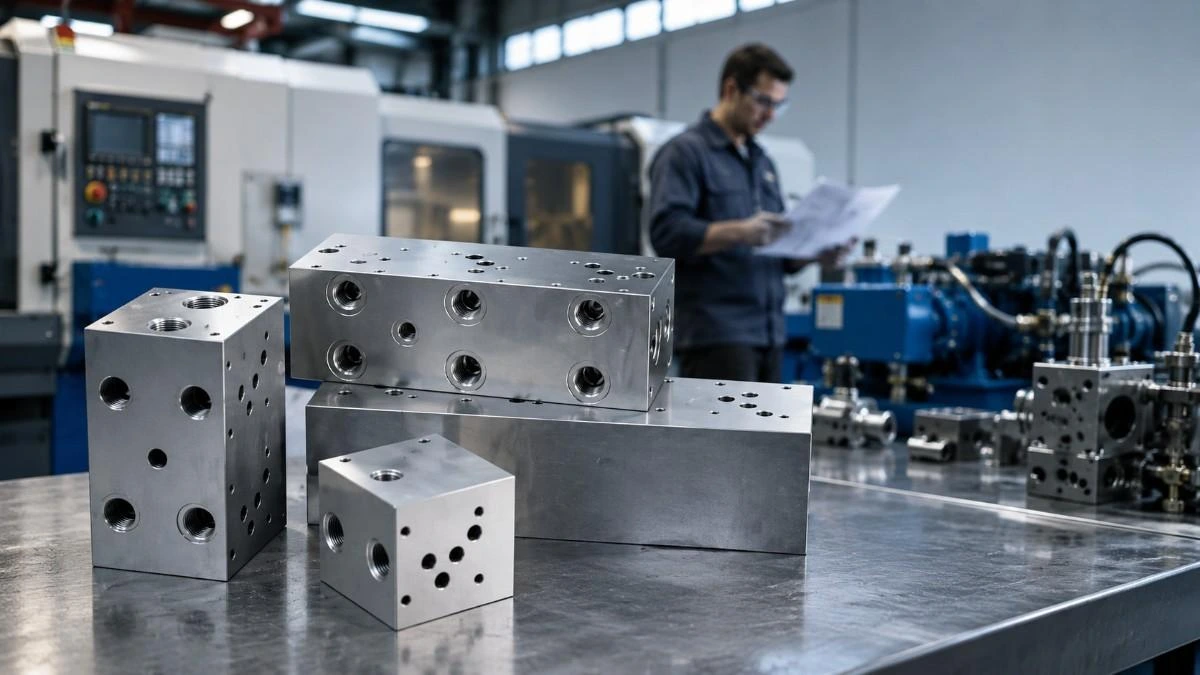
Strip away the jargon and a Hydraulic Manifold Block is just a solid chunk of metal — aluminium, mild steel, stainless, depending on the job — with passages drilled through it to move pressurized fluid from one component to the next. Instead of running a pump to a valve to an actuator with feet of external piping, all three simply bolt onto the same block. A bit like an electrical junction box, except what's moving through it is oil, not current. Get the drilling right and fluid barely notices the trip; minimal turbulence, next to no resistance. That precision is why the Hydraulic control manifold has replaced the spaghetti-hose layouts you'd have seen on machinery years back.
Why Is It Important?
It's not just a neater way to route oil. Get it wrong and it shows up in the machine's performance months down the line.
- fewer external fittings, so fewer spots where a seal can eventually weep or fail outright
- everything routes internally, which frees up real space in housings that are already tight
- shorter flow paths — less pressure drop, less heat building up where you don't want it
- one central point for servicing instead of chasing a leak through six feet of hose
- machining tolerances stay consistent, so pressure behaves the same way cycle after cycle
Skip a proper Hydraulic Manifold System and you're back to longer hose runs and more places for something to go wrong.
Did You Know?: One manifold block can do away with dozens of feet of tubing and a dozen-plus separate pipe fittings in a single machine.
Types and Variants
There isn't a one-size-fits-all block. Most manufacturers work with four main configurations:
- Monoblock — cut from a single piece of metal, about as rigid as it gets, suited to compact high-pressure jobs
- Modular design, built in sections you can add to or pull apart later, handy when a circuit keeps changing
- Cartridge style: valve cavities sit inside the block itself, which knocks out a lot of potential leak points
- Subplate manifolds give valves and control assemblies a flush, stable base to mount on
All four sit under the wider category of Industrial Hydraulic Manifold builds, and picking one comes down to pressure rating, available room, and whether the circuit changes later. A Hydraulic valve block done as a cartridge makes sense where stopping leaks matters more than swapping sections around.
Features to Look For
Before settling on a supplier, it's worth knowing what separates a good block from an average one:
- ports drilled with real, consistent alignment — not just close enough
- the right material for your pressure and setting; aluminium if weight's a concern, stainless where corrosion's a factor
- bores smooth enough that turbulence and heat stay low
- port patterns that actually match your existing valves and actuators
- proof of pressure and leak testing, not just a claim on a spec sheet
A Hydraulic Valve Manifold that's never been properly tested might run fine the first week. Give it a few months and sloppy tolerances tend to surface as leaks.
Product Overview
Take a Hydraulic Manifold Block Manufacturer in India as a working example — most rely on CNC machining to hold tolerances across every port, since there's little room for error once fluid's under pressure. These blocks pull pumps, directional valves, and actuators into one housing, trimming assembly time and simplifying the circuit layout. Standard designs cover the usual jobs; custom builds handle whatever flow rate or space limit a project throws at them. Aluminium suits lighter work; carbon steel or stainless steel takes over where loads are heavier.
Benefits
Moving to an integrated block pays off in ways that show up fairly quickly once it's installed:
- less time spent on assembly, whether it's a new build or a retrofit
- fewer leaks than you'd get with a maze of separate hoses
- troubleshooting gets faster since every port sits in one place
- more usable space inside housings that were already cramped
- parts simply last longer with fewer joints working against each other
That's the whole case for why so many OEMs have dropped loose tubing setups in favour of a well-built Hydraulic Manifold — especially where downtime costs real money.
Trivia: Hydraulic manifolds got their start in aerospace fluid routing, long before industrial machinery picked up the idea.
Applications and Use Cases
You'll find manifold blocks wherever fluid control needs to stay compact and dependable:
- Mobile equipment — cranes, tractors, and construction gear that need tough circuits packed into tight spaces
- Industrial systems, think metal forming presses, injection molding setups, automated lines
- Aerospace work, where a compact, high-reliability assembly is non-negotiable
- Marine and offshore rigs — corrosion resistance matters here more than almost anywhere else
In every one of those settings, an Industrial Hydraulic Manifold does the same basic job — pulling flow paths together so the machine runs with fewer connections and steadier performance.
Fact: Most manifold blocks get pressure-tested well past their rated operating limit before they ever leave the factory.
Manifold Types at a Glance
Here is the table of Manifold Types:
| Manifold Type | Structure | Best Suited For | Leak Risk |
|---|---|---|---|
| Monoblock | Single-piece machined body | High-pressure, compact circuits | Very Low |
| Modular | Stackable, sectional design | Systems needing frequent changes | Low |
| Cartridge-style | Screw-in valve cavities | Space-constrained, high-cycle use | Very Low |
| Subplate | Bolt-on mounting surface | Standard valve-based circuits | Moderate |
Expert Tips and Buying Guide
A handful of things worth checking before you place an order:
- don't just match pressure rating — match the material to your actual fluid and environment too
- double-check port patterns fit your existing valves and actuators before anything ships
- ask straight out whether every unit gets flow and leak tested, or just a sample batch
- a good Hydraulic Manifold Block Dealer in India will answer configuration questions mid-install, not just before the sale
- if the circuit's likely to change down the road, lean modular — it saves rework later
Sort these out early and you avoid the costly redesign that follows once the manifold's already bolted in.
About NTH
N.T. Associates has spent over a decade building one thing — hydraulic systems that actually hold up. Hydraulic hosepipes, precision components, motors, vane pumps, power packs — everything we make is built around real application demands, not just technical specs. We don't work through catalogues or assumptions. Every customer conversation starts with understanding the operation — what it handles, where it runs, and what failure costs. That's how we design solutions that fit, not just products that ship. Manufacturing plants, heavy equipment operators, and process industries across India rely on us because our products are consistent and our support is direct. Tell us what your system needs. We'll build it.
Conclusion
It's easy to look at a Hydraulic Manifold Block and see just a lump of machined metal. But it carries more weight than that — fewer leak points, tighter maintenance, a simpler system overall. New build or retrofit, the configuration you pick and the manufacturer behind it end up shaping performance and cost for years afterward.
| Need a dependable Hydraulic Manifold Block Manufacturer in India for your next build? Reach out to our engineering team at NTH and we'll help you land on the right configuration. |
It brings pumps, valves, and actuators together into one drilled housing instead of connecting them with loose hoses and fittings. This shortens flow paths, cuts down on leak points, and saves space inside machine housings. That's why it's become standard across construction, industrial, and marine equipment.
>It depends on your fluid pressure and working environment. Aluminium works well when weight matters and pressure is moderate. Carbon steel or stainless steel suits heavier loads or corrosive settings, like marine and offshore applications. Always match material to actual operating conditions, not just pressure rating alone.
It depends on your fluid pressure and working environment. Aluminium works well when weight matters and pressure is moderate. Carbon steel or stainless steel suits heavier loads or corrosive settings, like marine and offshore applications. Always match material to actual operating conditions, not just pressure rating alone.
Cartridge-style manifolds house valve cavities directly inside the block itself, rather than bolting external valves onto the surface. This design eliminates several potential leak points that come with separate fittings. It's especially useful in space-constrained systems that also see high-cycle, repetitive use over long periods.
Poorly aligned ports create turbulence, restrict flow, and generate excess heat, all of which reduce performance over time. Precise, consistent drilling keeps pressure behavior stable cycle after cycle. It's one of the first things to check before ordering, since sloppy tolerances often only reveal themselves months after installation.
Reputable manufacturers pressure-test manifold blocks well beyond their rated operating limit before they leave the factory. It's worth asking suppliers directly whether every unit undergoes flow and leak testing, or only a sample batch. This single question often separates a dependable manifold from one that fails early.