
Hydraulic Manifold Block Design: Key Factors That Impact Performance
- Understanding Hydraulic Manifold Block Design
- Key Factors That Impact Hydraulic Manifold Block Performance
- Benefits of Proper Hydraulic Manifold Block Design
- Applications Where Hydraulic Manifold Block Design Matters
- Conclusion
Hydraulic systems are all about proper flow of liquid. The manifold helps in directing the flow of oil from the pump to the valves and actuators. Poor flow paths will result in more losses, while incorrect connections may even result in a leaking situation. A well-designed hydraulic manifold block can simplify routing and arrangement of the piping. N.T. Associates are able to talk about hydraulic applications.
Understanding Hydraulic Manifold Block Design
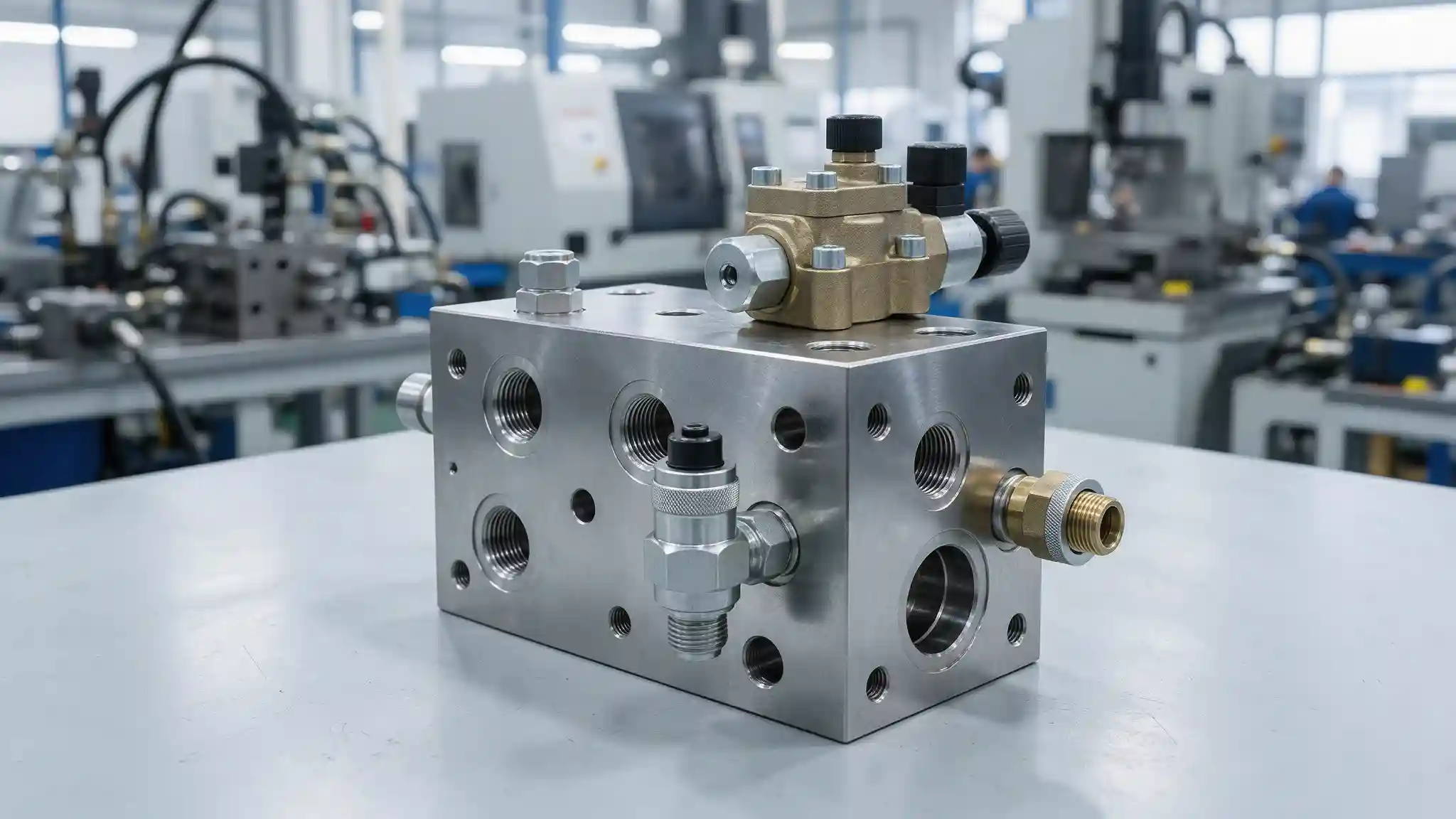
The term Hydraulic manifold block design is used when the size and shape of the inner passages, ports, valve mounting surfaces and connections in a single hydraulic manifold are planned. It conveys high pressure fluid by means of circuit paths to perform a number of hydraulic functions.
A manifold is a group of valve connections. This design should be similar to the circuit, pressure, flow and space.
Role of Manifold Blocks in Hydraulic Systems
Manifold is used to join important hydraulic parts and guide the hydraulic fluid to the pump and control valve/actuator.
The layout of a circuit that is well planned can make things easier and it helps to make it easier to maintain.
Key benefits include:
- Minimising external pipes and fittings.
- Setting up connections into a compact assembly.
- Making installation and troubleshooting simple.
- Supporting inspection and maintenance.
Correct size, compatible parts and manufacturing quality are important for benefits to be received.
Key Factors That Impact Hydraulic Manifold Block Performance
Performance is based on the materials used, shape of the passage, pressure capacity, and precision of machining, which are all interrelated.
Material Selection for Strength and Durability
The material of the Hydraulic manifold block must withstand operating pressure, loads, temperature and environmental effects. Depending on the type of the application, aluminium, steel, stainless steel and cast iron are suitable material choices.
Options available are:
- Asbestos: Do not use as it is dangerous to your health.
- Steel: When high mechanical properties are desired in a particular application
- Aluminum: Resistance to corrosion when used in a corrosive environment
- Steel: Suitable for some applications where strength is required.
Remember the fluid compatibility, corrosion, and other service requirements of the fluid. Consider pressure rating and grade of the material before approval.
Port Configuration and Flow Path Optimization
Flow inside the port and geometry of the port influences the flow characteristics. Routing and/or dimensioning the ports sub-optimally may result in increased pressure drop and restricted flow.
A good hydraulic block design must take into account:
- Flow rate for each passage as required.
- The dimensions of the port, the type of thread, and the location of the port.
- Smart routing without any unwarranted limitations.
- Properly sized walls on intersecting passages.
- Entry for inspection and maintenance purposes.
Calculations and drawings provide a means to avoid passage interference while maintaining flow, strength and sealing.
Pressure Rating and Hydraulic Performance Requirements
A manifold should be able to handle the working pressure, pressure surges, and the flow. The high pressure hydraulic manifold block should have sufficient structural strength and sealing parameters for the job it was designed to accomplish.
Assess:
- Normal and maximum operating pressure.
- Peak flow demand and possible losses of pressure.
- Fluid temperature and viscosity is one of the parameters.
- Starting and stopping surges.
- Safety factors and tests that apply.
The maximum pressure is a function of material, geometry, threads and seals. Check the completed assembly's rating.
Valve Integration and Circuit Compatibility
These will have to be included within the hydraulic valve manifold block design, with directional valves used to control the motion of a fluid, pressure-control valves controlling pressure and flow-control valves controlling fluid delivery.
Mounting patterns, cavity sizes, port connections, and servicing should be verified. Valves should be capable of working together with the circuit pressure and flow. In case of replacement, both inside and outside sizes should be checked on the new manifold.
Precision Machining and Manufacturing Accuracy
Manufacturing accuracy assures proper machining of cavities, ports, and mounting faces. A Hydraulic manifold block Manufacturers that has been CNC-machined is capable of being sized properly.
Quality control includes:
- Accurate drilling, tapping and valve-cavity machining.
- Proper surface finish, sealing surfaces.
- Removal of burrs and machining debris.
- Measurements of critical dimensions.
- Appropriate pressure and leakage testing.
Valves may be damaged by metal particles – use approved cleanliness and testing procedures.
Did You Know? “Hydraulic passages that have small burrs or metal particles interfere with the operation of the valves.”
|
Read More on This Topic: What Is a Hydraulic Manifold Block? Types, Working & Applications |
Benefits of Proper Hydraulic Manifold Block Design
The process is simplified with appropriate installation of a well-designed manifold, which also aids in routing and reducing connections.
Advantages include:
- Better flow control: Allows flow control based on circuit requirements.
- Less connection points – There could be less points of possible leakage from the external pipes.
- Less connections: Helps in easy installation in case of less connections.
- Easy maintenance: Easy designs facilitate troubleshooting.
- Compact construction: Valve integration allows small assemblies.
Good design is helpful for performance, but will not prevent all failures and ensure energy savings.
Improved Reliability and Reduced Maintenance
Problems can be minimised through planned passes and compatible seals and accurate machining. Routine inspections aid in the detection of leaks, contamination and unusual circumstances before they become a problem.
Trivia: “The manifold block may be used to pass on a number of hydraulic valves via internal passages, thereby decreasing the number of outside pipes.”
Compact Design for Modern Industrial Equipment
Integrated manifold space and simplify layouts, because they are a consolidation of connections. Provide access to valves, seals and inspection points without safety hazards.
Applications Where Hydraulic Manifold Block Design Matters
In every hydraulic application where hydraulic fluids influence movements or forces, the design of the manifold is important. Configuration should be based on environment, pressure and control requirements.
Common applications include:
- Construction equipment: Lifting, steering and movement systems.
- Industrial machines: Presses, production machines, material handling.
- Automation systems: Hydraulic actuators and controlled machine operations.
- Compact equipment that needs organised fluid routing is mobile hydraulics.
- Marine equipment: Applications needing suitable corrosion protection.
- OEM machines: Circuits designed for a particular need in the equipment.
Check the circuit diagram, flow demand, pressure rating, valve compatibility and installation conditions. N.T. Associates will be able to discuss the hydraulic manifold requirements and suitable configuration for industrial applications.
Conclusion
To ensure reliable performance, both the materials and their passages are needed to be suitable, the pressure ratings correct, and the valves compatible, as well as manufacturing to meet the required precision.
N.T. Associates are suppliers of hydraulic manifold block solutions and components to industry. In the case of a Custom Hydraulic Manifold Block, create a circuit diagram, pressure and flow requirements, valve specifications and mounting restrictions. This information is useful to set up an appropriate configuration.
| Are you in search of an appropriate hydraulic manifold block? Discuss your application requirements with N.T. Associates and determine if there is a solution that fits your needs. |
It's the "traffic control" for your hydraulic circuit. The oil enters from the pump, and the block conveys the oil to the desired destination. Fewer hoses and fittings equals less leaks and it is so much easier to service!
Well, it depends on the use. Steel is able to withstand the pressure, whereas aluminium is lighter and is resistant to corrosion. Stainless steel will be a better choice if the fluid is rough. Review any selection before making the final decision in the light of your working pressure/temperature.
If the port sizes are not adequate, the oil flow will be slowed and will be detected by the loss of pressure and additional heat. Smooth routing, the correct type of thread, and adequate wall thickness between passages are all helpful, as is having sufficient strength to the block under load.
Start with the maximum working pressure (plus start-up and shut down surges). Next check flow rate, oil temperature and mounting patterns of the valves. Be sure to review the rating of the final assembly as well since it is often the seal and threads that determine the true limitation.
Small errors lead to headaches! A burr not removed or a slightly off cavity may prevent a valve from seating properly, and bits of metal may be blown along the entire circuit. That doesn't happen when it's administered through careful CNC machining, deburring and pressure testing.
Please provide your circuit diagram, pressure and flow requirements, valve specifications and any limitations for mounting. N.T. Associates can then propose a layout that will suit your application and space. These are pre-prepared and do not have to be done in the middle of the process.