
How Hydraulic Flow Control Valves Improve System Performance
- What Is a Hydraulic Flow Control Valve?
- How Flow Control Affects Hydraulic System Performance
- Key Ways Hydraulic Flow Control Valves Improve Performance
- Industrial Applications Where Precise Flow Control Matters
- Factors That Influence Flow Control Valve Performance
- Why Quality Flow Control Matters for Long-Term Performance
- Conclusion
Ask any hydraulic technician what makes a machine feel "right" and most will point to one thing — how smoothly it moves. Smooth operation is not an accident. This is all about managing the flow of the fluid within the circuit, which is where the Hydraulic Flow Control Valve comes into play. Get flow right, and cylinders extend evenly, motors spin at a steady pace, and the whole system just feels dependable.
So what exactly is this valve doing inside a hydraulic circuit? Let's break it down.
What Is a Hydraulic Flow Control Valve?
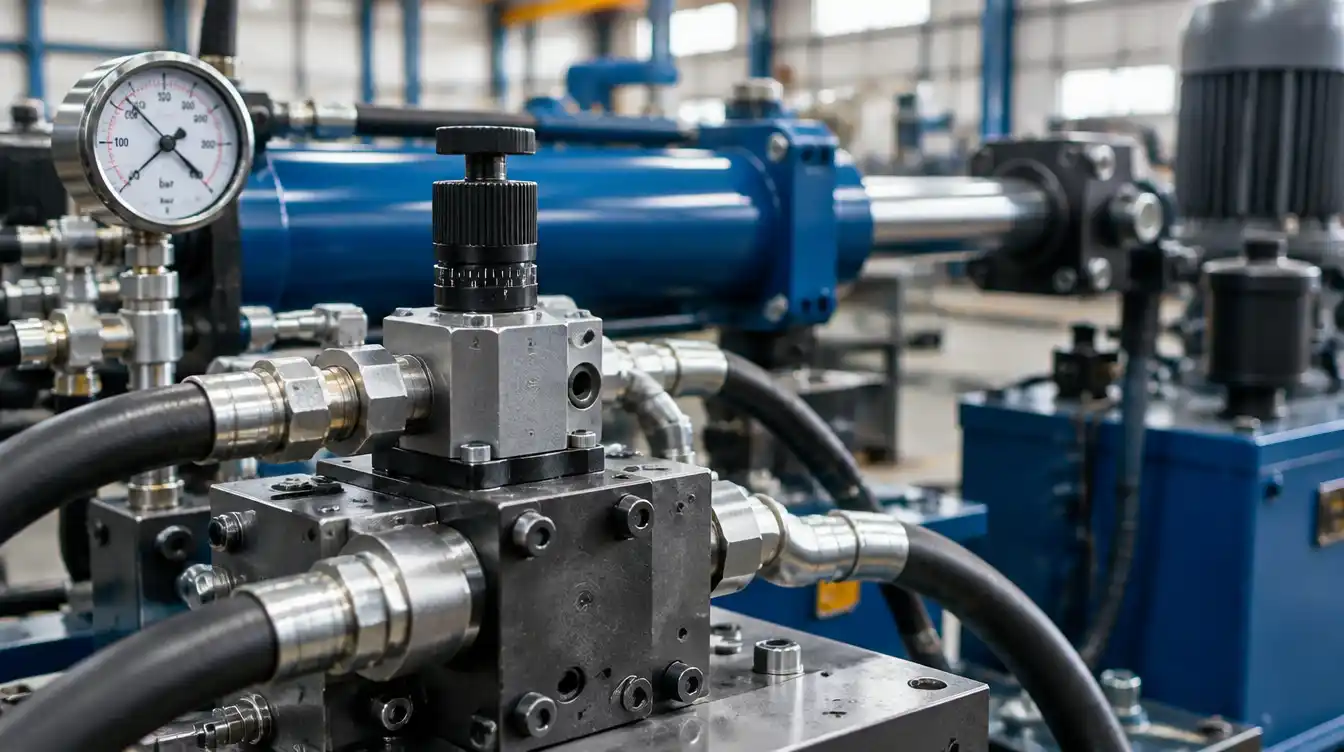
In plain terms, a Hydraulic flow control valve manages how much fluid passes through a line at any given moment. It's not concerned with pressure or direction — that's a job for other valves. Its focus is volume and timing: how much fluid gets through, and how fast.
This single function is often enough to turn a jerky, unpredictable actuator into one that moves with real precision. We've supplied these valves across dozens of setups at N.T. Associates, and the difference they make is rarely subtle once installed correctly.
Here's what this generally looks like in practice:
- Controls the volume of fluid reaching an actuator
- Sets cylinder and motor speed independently of pump output
- Works alongside — not instead of — directional and pressure valves
- Comes in fixed, adjustable, and pressure-compensated versions
Did You Know? “Basic hydraulic machinery has existed since the industrial revolution, but valves that could hold actuator speed steady even as pressure changed didn't really become standard until manufacturing started scaling up automation in the mid-1900s.”
How Flow Control Affects Hydraulic System Performance
Here's the simple physics of it — more fluid reaching an actuator per second means faster movement. Less fluid means slower movement. But speed is only part of the picture. How accurately a machine repeats the same motion, cycle after cycle, matters just as much for overall hydraulic system performance.
When flow isn't controlled well, you get inconsistent cycles, sudden jerks, and machines that simply don't behave the same way twice.
A few things tend to improve once flow is dialled in properly:
- Actuator speed stays steady even as load shifts
- Cycles repeat more accurately in automated tasks
- Fewer surprise stoppages caused by erratic behaviour
- Overall output goes up simply because less time is wasted
Key Ways Hydraulic Flow Control Valves Improve Performance
Once flow is under control, the benefits ripple through almost every part of the machine — from how it moves to how long its parts last before wearing out. Let's go through them one at a time.
Precise Control of Actuator Speed
A flow control valve allows you to set a particular actuator speed, and the speed will remain constant even if the pressure varies somewhere else within the system. This is very important in systems where a certain motion should be repeated exactly in each cycle.
What this tends to give you:
- Cylinders extend and retract without sudden speed changes
- Motors hold a steady rotational speed
- Fine speed adjustments without touching pump settings
- Machine speed that actually matches what the process needs
Smoother and More Accurate Machine Operation
Nobody wants a hydraulic arm that lurches forward or overshoots its mark. Sudden bursts of fluid cause exactly that kind of unpredictable jump. Regulated flow removes those spikes, and hydraulic machine control becomes noticeably steadier as a result — something that matters a lot in precision-heavy work.
You'll usually notice:
- Fewer jerks or overshoots mid-cycle
- More consistent results across repeated runs
- Tighter control in machinery where tolerances are small
- Fewer errors creeping into automated processes
Improved Energy Efficiency
When flow isn't regulated, fluid often ends up circulating more than it needs to, wasting energy in the process. A properly matched valve won't magically cut your energy bill on its own — but when it's sized correctly for the application, it plays a real part in better hydraulic system efficiency across the whole circuit.
This usually shows up as:
- Less fluid being bypassed or wasted unnecessarily
- Lower heat build-up from restricted flow paths
- Reduced load on the pump over time
- A circuit that simply runs more efficiently overall
Reduced Component Stress and Wear
Every sudden jolt or pressure spike takes a small toll on cylinders, motors, and fittings — it adds up faster than most people expect. Steady, controlled flow softens these transitions, which is one reason equipment supplied through N.T. Associates tends to hold up well over years of use.
Some of the payoff here includes:
- Less mechanical shock during start-stop cycles
- Lower stress on seals, hoses, and connections
- Slower wear on actuators over time
- Longer gaps between maintenance visits
Better System Stability and Reliability
If there's one thing that separates a good hydraulic system from a frustrating one, it's consistency. When flow stays steady from one cycle to the next, machines become predictable — and predictable machines are the ones that don't cost you unplanned downtime.
That kind of reliability usually brings:
- Machine cycles that barely vary run to run
- More confidence when running unattended, automated processes
- Fewer unexpected performance dips
- Equipment you can actually plan production around
Did You Know? “On a precision press, a flow variation of just a few percent can be enough to throw off cycle timing and affect part quality — which is exactly why many facilities avoid default factory settings and specify proper hydraulic flow control valves instead.”
Industrial Applications Where Precise Flow Control Matters
This isn't a component that only matters in one corner of industry. Anywhere motion needs to be accurate, safe, or repeatable, you'll find Industrial hydraulic valves quietly doing the work — from heavy construction sites to tightly controlled manufacturing floors.
A few places where this shows up regularly:
- Machine tools that need repeatable, accurate movement
- Presses used for stamping and metal forming
- Lifts, conveyors, and other material-handling systems
- Excavators, loaders, and other construction equipment
- Automated assembly and manufacturing lines
Factors That Influence Flow Control Valve Performance
Not every valve is a good fit for every job. The right choice — and how well it performs long-term — depends on a handful of technical details that are easy to overlook if you're rushing the selection process.
Worth checking before you pick one:
- Flow capacity matched to what your system actually needs
- Pressure rating suited to your operating range
- Adjustment type — manual, fixed, or pressure-compensated
- Compatibility with the fluid you're running
- Temperature range the system typically operates in
- How well contamination and filtration are controlled
- Whether the valve is genuinely sized right for the circuit
Why Quality Flow Control Matters for Long-Term Performance
The smallest incorrect choice in the valve spec can sabotage a perfectly designed hydraulic system silently. The long-run effectiveness of the system depends entirely on the proper component selection, correct installation, and consistent maintenance.
That's usually where an experienced supplier makes the real difference. At N.T. Associates, we work directly with industrial clients to match flow control components to what their equipment actually needs — not a generic spec sheet.
If you're reviewing your current setup, it's worth asking:
- Do your valves actually match your flow and pressure needs?
- Did you follow the manufacturer’s recommendations for installation?
- Have your fluids been checked and maintained properly?
- Is it time to consult with an expert about your system?
| Need a reliable Hydraulic Flow Control Valve for your system? Talk to N.T. Associates |
Conclusion
Good flow control doesn't get much attention, but it quietly does a lot of heavy lifting — better precision, less wear, stronger efficiency, and cycles that repeat the same way every single time. That's a lot of value from one component. If your equipment could use a tune-up in this area, the right Hydraulic Flow Control Valve is a good place to start. The team at N.T. Associates can help you figure out exactly what your system needs to hit better hydraulic system performance.
Speed depends on how much fluid reaches the actuator each second. A worn or misadjusted valve lets that flow drift, so instead of holding a steady pace, the cylinder or motor speeds up in one part of the cycle and drags in another.
Not really. A relief valve exists to bleed off excess pressure and protect the circuit. A flow control valve deals with volume and speed instead. They usually work in the same system side by side, but one can't cover the other's job.
It's a common pairing actually. The pump sets overall output; the valve then adjusts flow to one specific actuator without anyone touching pump settings. Together they let operators control individual machine functions inside a larger circuit.
This depends greatly on the operating environment for the system. It is usually checked at least a couple of times per year as standard procedure. However, if the system involves high heat, dirt, or high load, checking is better done more frequently.
Yes, and it's an easy detail to get wrong. Go too small and flow gets choked, causing pressure drops. Go too large and fine adjustments become hard to hold. Sizing mistakes like this are more common than people think when specs are done in-house.
Picking the right one gets tricky once you factor in load variation and fluid type. That's where N.T. Associates comes in, working directly with clients to skip the trial and error that usually ends in a valve that underperforms or wears out early.